
Checking into China as a foreign guest
Draft: not yet verified in the live app. Fees, limits, and menus change—confirm on the in-app payment screen and in the provider’s official Help.Verification status: DRAFT — verify in the live app before publish
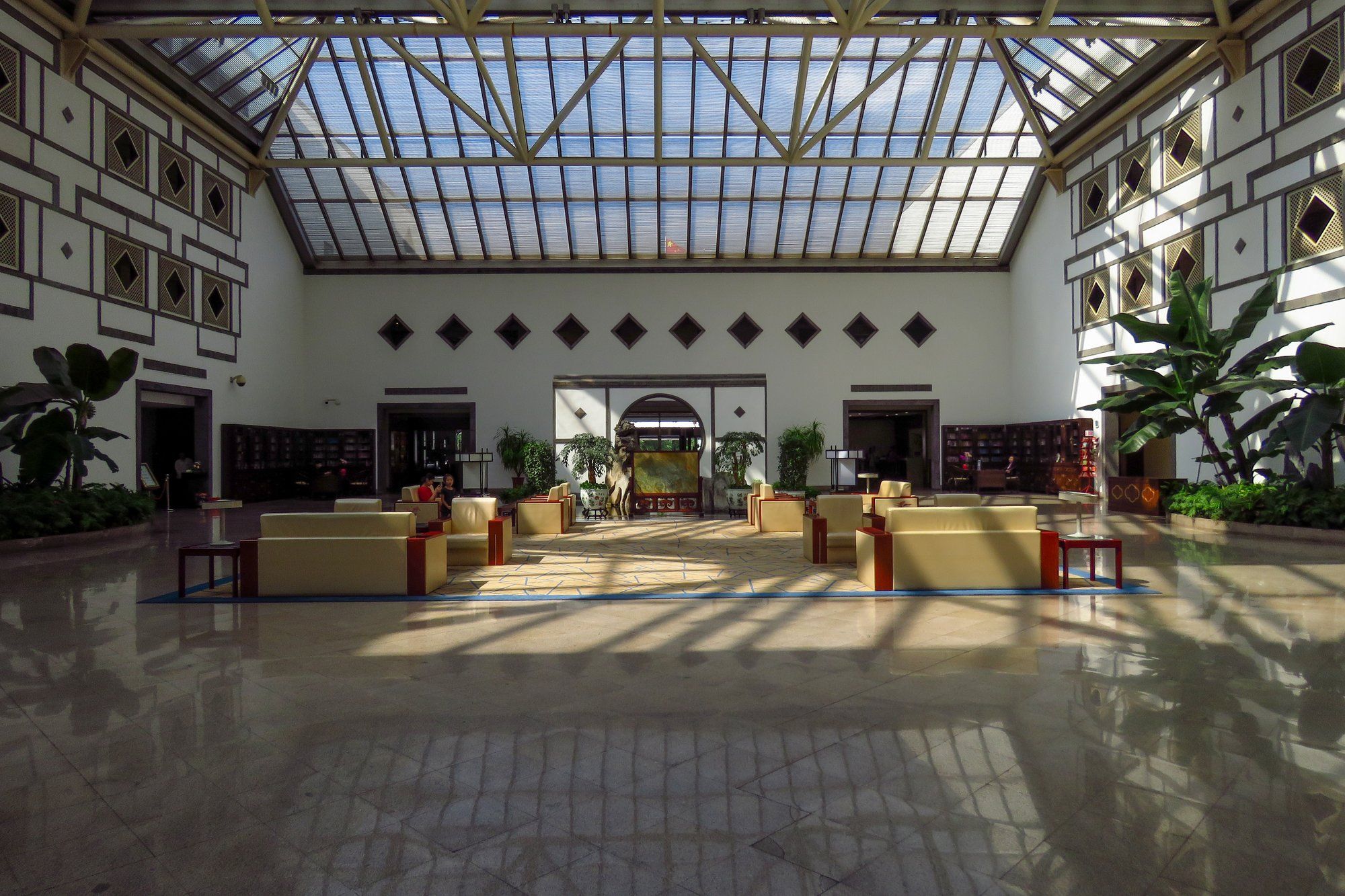
Chinese hotels are extraordinary value — a four-star room in Chengdu costs less than a roadside motel in Ohio. The front desk still runs on a police registration system that not every property is set up to use, and the cheapest listing is often the one that turns you away at 11 p.m. Here is how booking, check-in, and the registration rule actually work.
China Arrive is not affiliated with Trip.com, Booking.com, Agoda, any hotel chain, Alipay, WeChat, Apple, or Google. This page is not a booking service. The phones are illustrated screens, not photographs. Names, passport numbers, and card digits are samples. Prices are indicative ranges for 2026, taxes included, and they move with the season. Read the deposit and the cancellation line on the listing you actually buy. This is not legal advice: the registration duty is yours when the stay is not a hotel, and the hotel’s to file when it is.
- Mid-range¥300–500Big-city nightly rate for a good room
- Hours14:00 / 12:00Standard check-in / check-out
- Deposit¥200–500Refundable, collected at the desk
- Not a hotel24 hRegister in person if nobody files it for you
- Fine¥2,000Article 76 cap for a missed non-hotel registration
Book through an international platform and the hard part is usually already solved: Trip.com, Booking.com, and Agoda mostly list properties that are set up to register foreign guests, and Trip.com flags it explicitly. Expect ¥300–500 a night for a good mid-range room in Beijing or Shanghai, ¥450–800 for four-star, and about half that in Chengdu or Xi’an. Check-in starts at 14:00 and check-out is 12:00 almost everywhere. At the desk you hand over your original passport, they scan the data page and visa stamp, take a webcam photo, and collect a refundable deposit of ¥200–500. The whole thing takes 5–15 minutes. The hotel then files your stay with the local public security organ — that is a legal duty, not a favour, and it is why properties without the system sometimes refuse you. A 2024 notice from the Ministry of Commerce and six other departments (商务部等七部门) says local authorities and platforms must not use licensing thresholds to stop properties hosting foreign guests, and that properties must not advertise “no foreigners.” A 12367 immigration service exists for this kind of dispute. In practice, small inns and most 民宿 still cannot complete the registration, so treat “accepts foreign guests” as a filter, not a guess.
Jump to a section: verdicts · four doors · the desk · the listing · nightly costs · 24-hour rule · if the desk says no · money · the room · cities and phrases
The verdict in four lines
Assessed for a leisure or business visitor on a tourist visa, staying three to ten nights, with a foreign credit card.
- BookingGenuinely easyEnglish inventory is deep and cheap. Foreign cards clear without argument when you prepay.
- The front desk5–15 minutesPassport scan, photo, one form, one deposit. Slower if you are the first foreign guest of the week.
- ValueHard to beatA ¥600 four-star room in Chengdu would be a much dearer room in most Western cities — often with a better breakfast.
- The real trapInventory, not priceSmall inns and 民宿 often cannot register you. The refusal happens at 11 p.m., with your bags.
The single most useful decision: book a chain — an international brand, or a Chinese mid-market chain such as Atour (亚朵), Ji (全季), or Hanting (汉庭) — through an international platform, prepay it, and save the hotel’s Chinese name and address before you land. That one habit removes most of the failure modes on this page. Names are here so you can recognise them. China Arrive does not represent those chains.
Four doors to a room
The platform you book on determines whether you ever meet the refusal problem. This is the most consequential choice in the whole process.
| Channel | English | Foreign card | Foreigner-safe inventory | Verdict |
|---|---|---|---|---|
| Trip.com 携程国际版 |
Full | Yes | Filtered — properties state “guests from all countries welcome” | Default choice for most visitors. Same inventory family as Ctrip, an English front end, and English support that can rebook you if a hotel refuses. |
| Booking.com / Agoda International booking sites |
Full | Yes | Mostly — read the property policy block | Fine, and sometimes cheaper. Weaker China-side support when something goes wrong at the desk. |
| Hotel brand site Marriott, Hyatt, Accor, IHG |
Full | Yes | Guaranteed | Useful for points and upgrades. Rates are usually 5–15% above the booking sites. Worth it when you are using a loyalty stay. |
| Ctrip 中文 / Meituan / Fliggy Domestic Chinese apps |
None / partial | Hit and miss | Unfiltered — cheapest listings included | Cheaper by 10–30%, but you are browsing the full market, including properties that cannot register you. Only with Chinese help. |
| Serviced apartments for 5+ nights or families |
Usually | Yes | Check per building | Kitchen, laundry, two rooms, about ¥500–1,200. Confirm registration capability in writing — individual landlords vary. |
The 2024 rule change worth knowing. The seven-department notice says local authorities and platforms must not use licensing thresholds to stop accommodation providers hosting foreign guests, and that properties must not advertise “no foreigners.” Enforcement is real and uneven. If a desk refuses you, you are no longer arguing that the law forbids the stay. You are arguing with a property that has not set up its system, which is a different and faster conversation. Read the notice on the English government page linked under Sources.
Two things that no longer exist. Airbnb pulled its mainland China listings in 2022 — do not plan around it. And the old “foreigner-only hotel” list is gone. There is no government roster to consult, only the platform’s own flag and a message to the property.
The desk, in five steps
Chinese check-in is not slow because the staff are slow. It is slow because a legal registration is being completed in front of you. Knowing the sequence makes it feel routine.
2 min 1. Arrive with the passport that made the booking
Hand over the original passport, not a photo of it and not a driver’s licence. The name on the reservation must match the passport exactly — middle names included, in the same order. A mismatch is the second-most-common reason a check-in stalls, after registration capability.
If you booked under a nickname or a shortened given name, say so immediately and show the confirmation. Fixing a name in the system is possible. Fixing it after midnight with a tired clerk is harder.
Your visa page or latest entry stamp must be in the same passport. A new passport with an old visa inside the expired one will cause a long conversation.
5–10 min 2. The scan: data page, visa, and your face
The clerk scans the photo page and your visa or entry stamp, then photographs you with a small webcam on the counter. This is not optional. The photo and passport data go to the police accommodation system.
You may be asked to fill a short 临时住宿登记表 — name, nationality, passport number, visa type, onward address. About ten fields, in Chinese and English.
This is also when they confirm the number of guests. Every guest must be registered, including a partner or child sharing the room. Unregistered guests are the hotel’s liability, and the desk will ask.
Under Article 39 of the Exit and Entry Administration Law, a hotel must register a foreign guest and submit that registration to the local public security organ. If you stay anywhere that is not a hotel, you or your host must register in person within 24 hours. That split is the root of everything else on this page.
2 min 3. Deposit — and the receipt that matters
Expect ¥200–500 per room at mid-range properties, about ¥100 at budget chains, and ¥1,000 or more at luxury hotels. It is collected by card pre-authorisation, Alipay or WeChat, or cash, and returned at check-out.
Pre-authorisation is not a charge. It freezes the amount, and the release takes 3–15 days depending on your bank, which surprises people who check a statement at the airport. Alipay and WeChat refunds are immediate. Set those wallets up before you fly: Alipay and WeChat Pay.
If you pay cash, keep the paper receipt. Cash deposits are the ones that occasionally go missing at a shift change.
3 min 4. Key card, and five questions worth asking
Ask, in this order: breakfast times and floor, Wi-Fi password (often the room number plus surname), check-out time, whether the deposit is released automatically, and what a late check-out costs — usually ¥50–100 per hour, or half a night’s rate.
Two cards are standard for a double room. The key card usually also operates the lift and the room power. There is a slot inside the door for it. Keep one card in your wallet. The Chinese name on it is the address a driver will believe. Ride-hailing setup is in DiDi for visitors.
optional 5. Ask for the registration slip
The hotel files your registration, and you are free to go. Still ask for a printout or a photo of the 境外人员临时住宿登记表 — the slip showing you were registered.
You will want it if you extend a visa, open a bank account, buy a SIM on a contract, or deal with a driving-licence counter. Without it, those desks send you back to the hotel. Hotels can reprint it during your stay.
Staying with friends, in a rented flat, or in a 民宿? There is no hotel to file this for you. You have 24 hours to register in person. See the rule below.
REGISTRATION FORM
NOT FILED
Arriving after midnight? Tell the hotel your flight number and expected arrival when you book, or message them that day. Budget chains routinely release no-show rooms around 2 a.m., and a prepaid booking does not always protect you.
How to read a listing
Six lines on a booking page decide whether the night goes smoothly. Most travellers read the price and the photo. Read these instead. The phone is a sample listing for a fictional “Bund Hotel,” with the six markers numbered.
- The foreign-guest flag. “Guests from all countries welcome” is the sentence to look for. Its absence is not proof of refusal — it is the first thing to verify.
- Star rating versus reality. China’s star labels (星级) are dated and unevenly applied. Trust the brand and the recent reviews more than the stars.
- Cancellation deadline, in local time. “Free until 18:00” means Beijing time on that date. Miss it and the first night is charged. No-shows are charged in full on non-refundable rates.
- Deposit, stated up front. If it is not on the page, it is still coming. Budget about ¥300, or a card that can hold a pre-authorisation.
- Room type, decoded. Twin means two single beds. Double or big bed (大床) means one large bed. Superior usually means the smallest room in the building.
- Window, explicitly. Cheap “special offer” rooms in Chinese cities are frequently windowless — internal rooms facing a corridor or a light well. The photos will not show this.
The four traps that survive a good listing: a windowless room sold as “superior”; a twin when you wanted a double; a room on a smoking floor; and a “city view” that faces a construction site. All four are fixable at check-in if you ask before you take the key — and nearly impossible afterwards.
What a night actually costs
2026 ranges, per room per night, taxes included. The gap between a Chinese four-star and a Western one is the reason many people come back. These bars are a sketch of the Beijing and Shanghai range, not a rate sheet from any chain.
| City | 3-star / budget | 4-star / mid | 5-star international | Where to stay |
|---|---|---|---|---|
| Beijing | ¥300–450 | ¥500–800 | ¥1,200–3,000 | Wangfujing, Dongdan, Sanlitun |
| Shanghai | ¥350–500 | ¥550–900 | ¥1,500–4,000 | Nanjing East Rd, Jing'an, Lujiazui |
| Chengdu | ¥200–350 | ¥400–650 | ¥900–2,000 | Chunxi Road, Taikoo Li, Tianfu Square |
| Xi'an | ¥220–380 | ¥450–700 | ¥1,000–2,200 | Bell Tower, South Gate, Big Wild Goose Pagoda |
Seasonality is sharp. During National Day (1–7 Oct), Chinese New Year (late January to mid-February; the date moves), and the July–August school holiday, city rates rise about 1.5–3×. Scenic areas such as Yangshuo, Zhangjiajie, and Harbin can go about 5×. Book one to two months ahead for those windows, and expect prepayment with no cancellation.
The 24-hour rule
Where you sleep decides who does the paperwork. Hotels file it. Everywhere else, the clock is yours.
Passport scanned at the desk. Data page, visa or entry stamp, and a webcam photo. The hotel submits the record to the local public security organ. It is usually the same day, and you do not make a separate trip. Ask for the slip anyway if you will need proof later.
The clock starts when you move in. A friend’s flat, a rented apartment, and most 民宿 are not hotel desks. You, or the person accommodating you, register in person within 24 hours at the police station for that address. Bring your passport, your visa or entry stamp, the landlord’s ID, and the lease or a letter from them. The station issues a registration form on the spot. Some cities also allow a local app or the landlord’s own reporting system — ask before you arrive.
Miss the 24 hours: Article 76 allows a warning and a fine of up to ¥2,000. Hotels that fail to submit a guest’s registration can be warned and, in serious cases, fined ¥1,000–5,000. That hotel-side penalty is why an unregistered property would rather refuse you than risk the filing.
If you are in a hotel
Nothing extra to file — but keep the evidence. The property submits your data. Ask for the stamped slip if you plan to extend a visa, open a bank account, or buy a contract SIM. Those counters ask for it, and hotels can reprint it during your stay.
If you are anywhere else
Go to the police station, with the landlord if you can. Passport, visa or entry stamp, the landlord’s ID, and the lease or a letter. Some cities now let the landlord report through their own system. Do not wait until the second night to find out which version your district uses.
If the desk says no
It happens, mostly at small independent properties and mostly late at night. It is a systems problem, not a judgement about you. Work the sequence. Do not negotiate for an hour.
Ask which reason
“Is it because the hotel cannot register foreign guests?” The answer tells you whether this is fixable. If it is registration capability, it is not.
Show the confirmation
Booking number, name, prepaid status. Sometimes the property is simply full and using the excuse. The platform can check that in minutes.
Contact the platform
Trip.com’s English support runs around the clock and can pressure the hotel or move you. That is the fastest path to a bed at midnight. China Arrive cannot rebook you.
Rebook a chain nearby
Open the app, filter toward four-star, and sort by distance. A 10-minute walk beats an hour of argument. Keep the refusal in writing for the refund.
Escalate afterwards
Use the 12367 immigration service — Chinese and English, around the clock — or complain through the platform you booked on. Refunds are routine. A night’s compensation is not.
Pay cash “to fix it”
No desk clerk can register you off the system. Anyone offering to “arrange it” for cash is creating a problem, not solving one.
Prevention beats escalation. Three habits remove almost all refusals: book a chain rather than an independent inn; book through a platform that flags foreign-guest acceptance; and avoid 民宿 and tiny guesthouses outside the largest cities, where registration systems are least likely to be in place. If you want a boutique stay, message the property in advance and keep the written yes.
Money at the desk
Hotels are one of the few places in China where a foreign card works reliably — above a certain tier. Below it, have a plan. Wallet setup, fees, and what a declined card looks like are on how to pay in China.
| Method | Works at | What to know |
|---|---|---|
| International credit card Visa · Mastercard · Amex · JCB | 4–5 star, international chains | Accepted for the room and the deposit. At 3-star Chinese chains the terminal may fail even when a sign says otherwise. |
| Prepaid through the platform | Every tier | The most reliable option. You arrive with nothing to settle but the deposit — which also removes the “card declined at 1 a.m.” scenario. |
| Alipay / WeChat Pay linked to a foreign card | Nearly everywhere | Best for deposits and incidentals. Set it up before you fly. The same wallets cover taxis, meals, and tickets. |
| UnionPay debit / credit | Everywhere | If you have one, it ends the conversation. Most foreign banks issue them only in some regions. |
| Cash | Legally, all properties | Keep ¥300–500 for deposits and small towns. Demand a receipt. Cash deposits are the ones that go missing. |
The deposit, precisely
Refundable, but not always fast. ¥200–500 per room at mid-range, about ¥100 at budget chains, ¥1,000 or more at luxury. Card pre-authorisations release in 3–15 days — the hotel releases immediately, and your bank does not. Alipay and WeChat refunds land at once. Cash is returned at check-out after a quick room inspection, which is why it is worth waiting at the desk instead of leaving for a flight.
The invoice (发票, fapiao)
Ask at check-out — not a week later. For expenses you need a fapiao, not a receipt. Give the desk your company name and tax number, or ask for a personal one (个人). It can be issued electronically to your email and is usually ready in minutes. Hotels cannot issue one once the stay is closed in their system.
Small print that costs money: minibar and room-service charges post to the room and settle at check-out. The two bottles of water beside the kettle are free. The ones in the minibar are not. Breakfast is often not included in booking-site rates — adding it at the desk costs about ¥50–120 per person, while the same buffet prepaid online is often ¥30–60. Tipping is not expected anywhere, including bellhops.
The room itself
Chinese hotel rooms are well equipped in ways Western rooms are not, and missing things you assume are standard. Neither list is intuitive.
You will find
- Two free bottles of water and an electric kettle — always.
- Slippers, and usually a toothbrush, comb, and razor kit (outside Shanghai).
- A smart toilet in most four-star rooms and above.
- Fast Wi-Fi, often a login of room number plus surname.
- Blackout curtains that actually black out.
- A 24-hour front desk and free luggage storage after check-out.
- Robot delivery to the door for 外卖 orders in many chains.
You will not find
- A face cloth. Bring one, or use the hand towel.
- English TV beyond a news channel in international brands.
- A Western breakfast — expect congee, noodles, steamed buns, and eggs.
- An iron in the room. Call housekeeping.
- Free late check-out. It is ¥50–100 per hour, or half a night.
- A bath plug in budget rooms. Showers only.
- Tips. Nobody expects one, and offering can confuse.
Two notes that improve the stay. Rooms on a smoking floor are common outside international brands — ask for a non-smoking floor explicitly. And “soundproofing” is a marketing word: request a room away from the lift and above the third floor. That one sentence solves most street-noise complaints.
City notes, checklists, phrases
Where to base yourself, what to confirm before you pay, and the eight sentences that get you through the desk. The sample surname in the first sentence is Park, matching the illustrated booking.
| City | Base yourself in | Why |
|---|---|---|
| Beijing | Wangfujing / Dongdan; Sanlitun | Walkable toward the Forbidden City. Sanlitun for embassies, bars, and Western food. |
| Shanghai | Nanjing East Road / People’s Square; Jing'an | A metro hub, a walk toward the Bund, and straightforward taxi geography. |
| Chengdu | Chunxi Road / Taikoo Li | Food, shopping, and metro in one grid. About 20 minutes to the panda base by taxi. |
| Xi'an | Bell Tower / South Gate | Inside the city wall, a walk to the Muslim Quarter, and a metro toward the Terracotta Army line. |
| Guangzhou | Zhujiang New Town; Beijing Road | A modern riverside district, and Beijing Road for older-city density. |
| Hangzhou | Hubin / Wulin Square | The east shore of West Lake — a walk to the water, and a metro toward the station. |
Before you pay
- Passport name typed exactly, middle name included.
- “Accepts foreign guests” confirmed on the listing, or in writing from the hotel.
- Chinese name and address saved as a screenshot and in your notes.
- Cancellation deadline in Beijing time, in your calendar.
- Deposit amount and the payment methods the desk accepts.
- Breakfast included or not — and its price at the desk.
- Metro distance under 500 m, not “near the metro.”
- Late arrival flagged with the flight number if you land after 22:00.
At the desk
- Original passport, plus the booking confirmation number.
- A card that works for the deposit — or about ¥500 in cash.
- Ask for the registration slip if you need it for a visa or a bank.
- Check the room before unpacking: window, floor, smoke smell.
- Photograph any damage you find, immediately.
- Take a hotel card in Chinese for taxis.
The rest of the pre-trip list — wallets, SMS, and tickets — is on the pre-trip checklist.
Ranges above come from the 2024 accommodation notice, Articles 39 and 76 of the Exit and Entry Administration Law, the 12367 immigration service, and Shanghai’s rule that hotels must not set out disposable toiletries unless a guest asks. Verify the deposit and the cancellation terms on the specific listing. Prepared as a November 2026 draft.