
Shared bikes in China for foreign riders
Draft: not yet verified in the live app. Fees, limits, and menus change—confirm on the in-app payment screen and in the provider’s official Help.Verification status: DRAFT — verify in the live app before publish
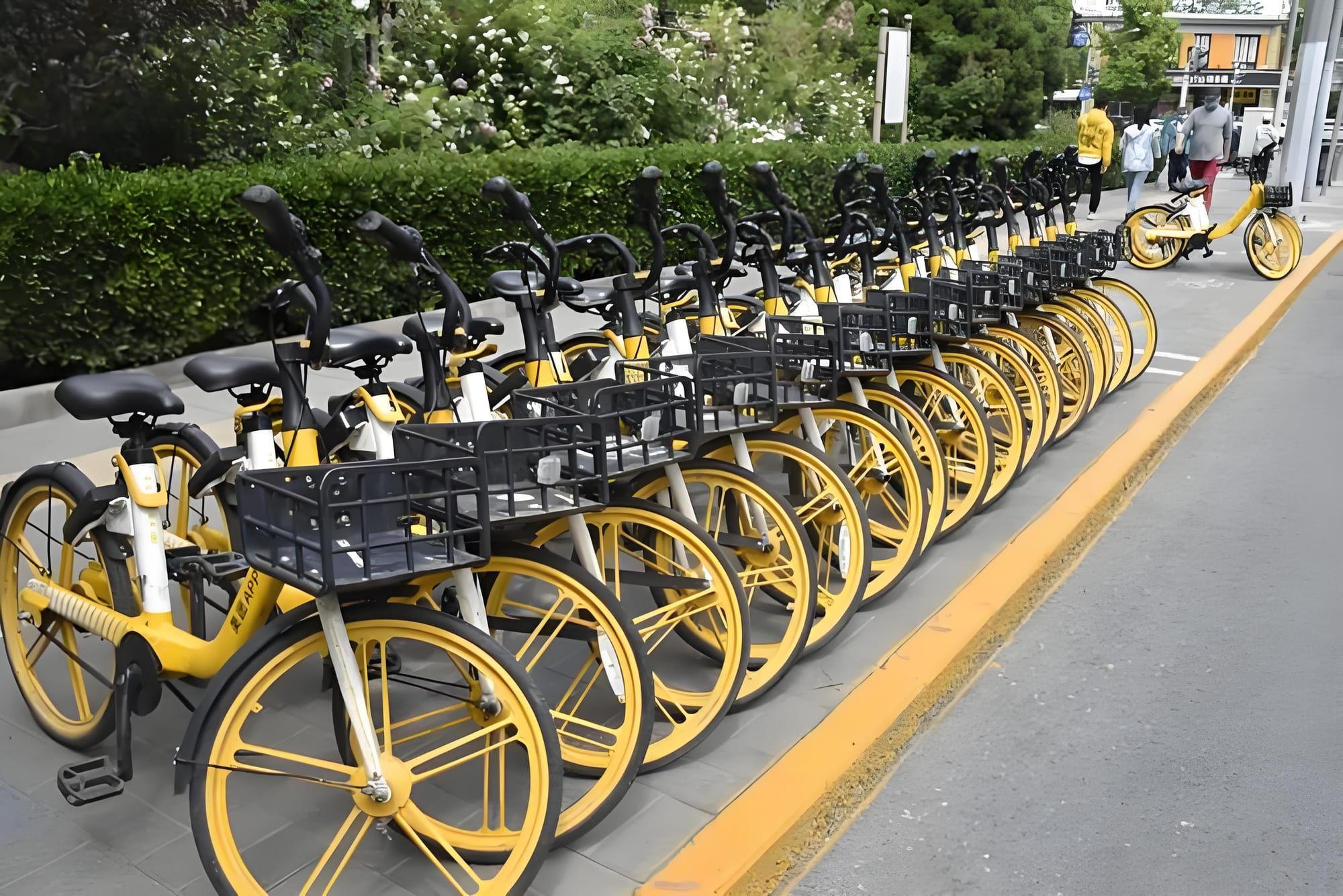
A million dockless bikes, three brands, one QR code. For about ¥1.50 you can cross a neighbourhood that is too far to walk and too short to justify a car — if you know which app to open, where the parking box is, and which lane you are allowed to use.
China’s shared bikes are the cheapest, fastest way to cover the last 1–3 km. You do not need a Chinese bank account, a Chinese phone number, or a separate app for each brand. If your Alipay is already passport-verified, you can walk up to a yellow, blue, or green bike, tap Scan, and be rolling in about twenty seconds. The fare is roughly ¥1.50 per 30 minutes, with no deposit for most verified accounts. The two things that actually go wrong are almost never the bike: parking outside the electronic fence (which can block you from ending the ride) and riding on the pavement (which is illegal and enforced).
This page is the mainland dockless system. Hong Kong and Macao run separate schemes.
China Arrive is not affiliated with Meituan, Hello Bike, Qingju, DiDi, Alipay, WeChat, Apple, or Google. The phones on this page are illustrated screens, not photographs of the app. Menus move. If a label differs, follow the screen in front of you, and confirm the fare and the parking zone in the app before you ride.
- ¥1.5 / 30 minTypical fare, all three brands
- 0 depositFor verified Alipay accounts
- 3 brandsAll readable by one Scan button
- 12 / 16Minimum age: pedal bike / e-bike
- ¥5–50Penalty for parking outside a zone
Jump to a section: verdict · three brands · five setup steps · six ride moves · costs · parking fence · six rules · e-bikes and helmets · when it fails · cities · checklist · phrases
The verdict in four lines
Assessed for a short-term visitor with a foreign passport, an Alipay account, and no intention of buying a bicycle.
- AccessEasier than expectedNo local SIM, no Chinese card, no separate registration if you go through Alipay.
- ValueRidiculous¥1.50 for 30 minutes, versus ¥18–30 for the same 5 km in a DiDi.
- FrictionParking, not ridingElectronic fences decide where the ride can end. Miss the box and the meter keeps running.
- RiskTraffic, not theftRight-turning cars, silent e-bikes, and pavements that are illegal to ride on.
Who this is for: anyone staying more than two days in a Chinese city. For a single afternoon, a bike is still worth it — but only if your phone has data and battery.
Three brands, one Scan button
Meituan, HelloBike, and Qingju cover almost every street. You do not have to choose.
Best for: your first ride. Sturdy three-speed bikes, a huge fleet, and an obvious yellow frame.
Best for: smaller cities, suburbs, and e-bikes. The standalone app is Helloride, and it has an English mode.
Best for: combining a bike leg with a DiDi ride in the same app and the same bill.
The one trick that removes the decision: open Alipay, tap Scan, and point it at whatever bike is in front of you. Alipay reads the code, identifies the brand, and opens the right mini-program. You do not need to know which company owns the bike, and you do not need three apps. Hello Bike in Chinese is 哈啰 (also written 哈罗). Qingju is 青桔.
If you already set up Alipay
The usual case after the Alipay guide
You are most of the way there. Skipping straight to the bike is normal: no shop, no counter, no queue. Turn location services on for Alipay. Without GPS the map cannot show bikes or parking zones. Setup steps are in Alipay for visitors.
If you have no Alipay at all
Allow about 15 minutes before the first ride
Install Alipay, register with your home number, verify your passport, and link a Visa or Mastercard. Do it on hotel Wi-Fi, not in the street. That account also covers metro codes, DiDi, and most payments. The walkthrough is Alipay for visitors. A second wallet is WeChat Pay. Both sit on the map in How to pay in China.
Setup in five steps
Roughly ten minutes, most of it waiting on checks you already did for Alipay. Do it on hotel Wi-Fi.
1. Confirm your Alipay is verified 2 min
Bike rental is a real-name service. If your Alipay identity check is already done, there is nothing to add.
Me › Settings › Account & Security › Identity Verification
Upload the passport photo page and complete the face scan. Approval is usually instant, and occasionally a couple of hours. If it stalls, use the Alipay guide’s verification steps before you blame the bike.
2. Link a card 2 min
Any Visa, Mastercard, JCB, Discover, or Diners card works. A ¥1.50 ride never approaches the ¥200 threshold where the 3% international-card fee starts, so bike fares are effectively free of that platform fee. The 3% rule, when a larger payment does cross the line, is 3% of the full amount. Detail: Alipay foreign-card fee.
Me › Bank Cards › Add card
If the card is declined, it is almost always your issuer’s fraud filter, not Alipay. Call the number on the back of the card and ask them to allow “Alipay / Ant Group” transactions. The illustrated card is fictional: PARK MORGAN, Visa ending 2468.
3. Turn on location and mobile data 30 s
The map needs GPS to show nearby bikes and, more importantly, the blue P zones where you are allowed to end the ride. Without it, the scan screen can refuse to load the bike.
Set Alipay to allow location always, not only while the app is open. A dead data connection in a narrow alley is the second most common reason a lock will not open. Bluetooth should be on as well: it helps the lock talk to the phone when the bike has a weak signal. A plan that works in China is covered in eSIM and roaming.
4. Scan the code on the bike 20 s
Tap Scan on the Alipay home screen and point at the QR. Codes sit on the handlebar, on the rear lock, or under the seat. A short beep and a click from the lock means you are in.
The first time only, a mini-program asks you to accept terms and confirm your phone number. Some accounts are also asked for a refundable deposit. It is released back to your card when you request it. Most verified accounts see no deposit.
Never scan a QR sticker that looks stuck on top of the original. Pasted-over codes are a payment redirect. If the sticker is raised or torn, or the app asks you to pay a deposit to a personal account, walk to the next bike.
5. Do a 20-second bike check 20 s
Shared bikes are used hard. Before you ride off, squeeze the brakes, press the tyres, rock the seat, and look at the chain. If anything fails, tap Report fault and take the next bike. You are not charged if you end the ride within the first couple of minutes.
Also check the seat-height quick-release. Set it so your leg is almost straight at the bottom of the pedal stroke. City riding is stop-and-go, and a low seat will wreck your knees.
The ride, in six moves
From the pavement to a closed bill. The last two moves are where first-timers lose money.
- Move 1 · 0:00
Find it on the map
Open the mini-program. Bikes appear as pins, parking zones as blue P circles. Walk to the pin. The last 20 metres are on you, because GPS is only accurate to about 10 m.
- Move 2 · 0:30
Scan and hear the click
The lock pops in about five seconds. No click means the bike is dead, already reserved, or has no signal. Try the next one. Do not force the lever.
- Move 3 · 0:40
Ride in the bike lane
Stay in the green-painted or white-lined lane on the right. If there is no lane, keep to the right edge of the road. The pavement is for walking, and riding there is illegal.
- Move 4 · arrival
Stop inside a P zone
Check the map before you dismount. The blue P circle, or a white painted box on the ground, is the place the ride can end. Outside it, the app will refuse to close the trip.
- Move 5 · lock
Push the rear lever down
Manual lock, physical click. Some models auto-lock. Most do not. Listen for the click, then check the app. A locked bike with a running timer is the single most common complaint.
- Move 6 · confirm
See the fare, then walk away
Wait for “Ride ended” and the amount. If the timer is still counting after you locked it, close and reopen the mini-program before you leave the bike.
Do not walk away with the timer running. The fare keeps accumulating, and after a while the company may add a lost-bike charge. If the app will not close the trip, photograph the locked bike, with the bike number visible, and contact in-app support before you leave. The shorter fix list is Shared bike won’t unlock.
What it actually costs
Short rides are almost free. The expensive part of a shared bike is never the riding. It is the penalty for leaving the bike somewhere the city does not allow.
The same 5 km, five ways. Typical central Shanghai and Beijing fares in 2026. Ranges reflect the city and the time of day. A bike takes about 25–40 minutes with no traffic, which lands inside one fare period. The metro is faster over that distance only if you count the walk to the station and the stairs. DiDi Express surges around 8 am and 6 pm. Bar lengths use the top of each range, scaled to the taxi.
Fare structure
What the meter is doing
| Unlock fee | ¥0 |
| First 15–30 min | ¥1.0–2.0 |
| Each extra 15 min | ¥1.0–1.5 |
| One hour total | ¥3–4 |
| Monthly pass | ¥15–35 |
| Deposit | Usually ¥0 |
The four things that cost extra
None of them is the riding
| Return outside the operating area | ¥5–20 |
| Parking outside a P zone | ¥5–50 |
| Bike not locked, or never returned | Ongoing fare, plus a fee |
| E-bike instead of a pedal bike | Roughly twice the fare |
Skip the monthly pass on a short trip. It is good value for residents at ¥15–35, but you need roughly 10–20 rides in a month to break even. For a one-week visit, pay per ride.
Parking: the electronic fence
This is the part that ends more rides badly than traffic does. Cities draw invisible boundaries around blocks. The GPS in the lock knows whether you are inside one.
- Do not end at a subway entrance
- Do not end at a bus stop
- Do not end in a shop doorway
- Blue P on the map = a legal parking zone
- Red zones = the app will not let the ride end
- Green band = your lane
Before you set off
Open the map and look at the destination, not only the bike. If there is no P circle within a few hundred metres, plan to walk the last block.
If you are outside a zone
The app shows the distance to the nearest legal zone. Ride there — usually 1–3 minutes — rather than abandoning the bike and paying a dispatch fee.
If you truly cannot park
Some apps let you end the ride outside a zone for a ¥5–20 fee. That is cheaper than leaving the bike unlocked, which keeps the meter running.
Six rules that are actually enforced
Chinese cities are genuinely good for cycling: wide lanes, a lot of flat ground, and drivers who expect bikes. The rules are strict and simple.
Bike lane, not pavement
Riding on the sidewalk is illegal in every major city, and it is the offence visitors get stopped for most. A fine is typically ¥10–50. Enforcement is sporadic, and it is real.
One person, one bike
No passengers on the rack, frame, or handlebars, and no child seats. It is illegal, unstable, and the fastest way to draw a traffic officer over.
Never against traffic
Riding the wrong way up a one-way street is common locally, and it is illegal. It is also how riders get hit at junctions.
Cars may turn right on red
At many junctions a car can turn right through a red light, straight across the bike lane. Do not assume a green cycle signal protects you. Look at the turning car.
E-bikes are silent and fast
Delivery e-bikes move at about 25 km/h with almost no sound. Check behind you before every lane change. Shared bikes do not have mirrors.
Age and attention
Minimum 12 for a pedal bike, 16 for an e-bike. No phone in your hand, no headphones, and do not ride after drinking. Penalties match the rules for driving.
Left turns: do not cut across lanes of traffic. Use the two-stage turn. Ride straight through the junction, stop on the far right corner, turn 90 degrees, then wait for the cross-direction green. It is what people on bikes actually do, and it is safer.
Night riding: shared bikes have weak or decorative lights. After dark, ride only on lit roads. A phone torch in a mount helps if you have one. Reflective clothing matters more than a bell.
E-bikes and helmets
The blue and green fleets include electric models in many cities. They are faster, slightly dearer, and governed by tighter rules. The app is the same. The obligations are not.
What changes with an e-bike
Same scan, different rules
- 16 and older only, versus 12 for a pedal bike.
- A helmet is required by national and local rules. Many shared e-bikes carry one. Check the strap and the buckle before you ride.
- 25 km/h cap by law. The motor cuts out above that. Do not expect to keep up with traffic.
- Bike lane only. E-bikes are banned from pavements and from some tunnels and expressways.
- Roughly twice the fare — typically ¥2–3 per 15 minutes.
Where you will and will not find them
Coverage is uneven on purpose
Shared e-bikes are widespread in most smaller cities and in the suburbs of the biggest ones. Central Beijing and central Shanghai restrict them heavily, so the yellow and green bikes you see there are almost all pedal models.
Hilly cities — Chongqing above all — are where an e-bike earns the extra yuan. On flat ground, a pedal bike is lighter, easier to park, and cheaper.
No helmet on the bike? Do not ride it. Buy a cheap helmet, or take a pedal bike instead.
When it goes wrong
Eight failures, in the order they hit first-time visitors, and the fix that works. The same list, with the same figures, is on Shared bike won’t unlock. No operator publishes a failure rate, so the bars are relative, not a percentage.
| Symptom | How often | Why it happens | What to do |
|---|---|---|---|
| Locked the bike, timer still running | The lock did not register, or the phone lost data at the moment of locking. | Close and reopen the mini-program. If the timer is still going, photograph the locked bike and contact in-app support. They can end it remotely. | |
| “You are outside the parking zone” | GPS drift of 10–20 m, or you stopped outside the blue P circle. | Follow the arrow to the nearest zone, usually 1–3 minutes away. Do not abandon the bike unlocked. | |
| QR code will not scan | Dirt, sun glare, a scratched sticker, or the bike is already reserved. | Wipe the code, step out of direct sun, and try the code under the seat. If the app says “in use”, pick another bike. | |
| Lock will not open | The bike has no signal, the lock battery is flat, or Bluetooth and location are off. | Turn on Bluetooth and location, wait 30 seconds, and retry. Then walk away. You are not charged for a bike you never unlocked. | |
| Card declined at unlock | Your bank’s fraud filter, not Alipay. A small foreign charge from a new merchant looks suspicious. | Switch to another linked card, or ask your issuer to allow “Alipay / Ant Group”. See Alipay payment failed. | |
| Bike is unrideable | Flat tyre, slipped chain, bent wheel, or a missing pedal. The fleet is high-mileage. | Tap Report fault, end the ride within the first two minutes (usually free), and take another bike. | |
| Phone dead, cannot end the ride | Cold weather, the camera, GPS, and the screen drain the battery. | Carry a power bank. If the phone dies mid-ride, lock the bike. The fare stops when the lock registers. Contact support when you can. | |
| Bike towed or moved | It was left in a no-parking area, and a cleanup crew moved it. | Contact support with the bike number. They can trace it and waive a lost-bike charge. |
The rule that prevents the expensive mistake: never leave a bike without seeing “Ride ended” on your screen. A photo of the locked bike, with the bike number visible, is your evidence if the bill is wrong.
City notes
Cycling quality varies enormously. A little local knowledge saves wrong turns.
| City | What to expect |
|---|---|
| Beijing | Flat, enormous, with wide bike lanes on the ring roads. Distances are bigger than they look. A “short” ride can be 6 km. |
| Shanghai | Flat and dense, and very usable around the French Concession and the Bund. Parking enforcement is strict. Use the painted boxes. |
| Hangzhou | Among the best cycling cities, with a lake circuit. West Lake has no-ride zones at peak times. Follow the signs. |
| Chengdu | Flat, relaxed, and full of bikes. A slow loop around the old town works well. |
| Guangzhou / Shenzhen | Hot and humid. E-bikes dominate. Lanes are good, and scooters will overtake you on both sides. |
| Chongqing | Hills, stairs, and tunnels. A pedal bike is the wrong tool. Take the metro, or an e-bike if you find one. |
| Xi’an | Flat inside the city wall, and useful in the Muslim Quarter. The wall itself is a separate ticketed attraction. Bikes there are rented, not shared. |
Before your first ride
Eight things worth checking.
- Alipay verified with your passport, and a card linked.
- Location services on for Alipay — always, not only while the app is open.
- Mobile data working, on a plan that covers China.
- Battery above 40%, or a power bank in your bag.
- The destination has a P zone. Check the map first.
- Weather. Rain makes painted lane markings slippery.
- No valuables in the basket. They bounce out.
- Hotel address in Chinese, saved offline, for the ride back.
Six phrases for the street
Show the screen, or read the pinyin.
Source note
Figures on this page follow platform fare pages for Meituan Bike (美团单车), HelloBike / Helloride (哈啰单车, also written 哈罗), and DiDi Qingju (青桔单车), plus Alipay’s help material on international cards, identity verification, and the ¥200 / 3% fee threshold. Age limits (12 and 16), helmet rules, and the e-bike speed cap follow national road-traffic rules. Municipal shared-bicycle rules published in 2025–2026, including guidance cited from Yangzhou, Leshan, and the Shandong consumer council, inform the parking and fine ranges. Figures were cross-checked against independent 2026 rider notes. Foreign-card mobile payments are also summarized by China Daily.
Fares, fines, and zone rules are set city by city and change without notice. Treat every number here as typical, not guaranteed. Confirm the live fare in the app before the first ride. Prepared from a November 2026 field report. Informational only.
FAQ
Do I need a separate app for each bike?
No. Open Alipay, tap Scan, and point it at the bike in front of you. Meituan Bike (美团单车), HelloBike (哈啰单车 / 哈罗), and Qingju (青桔单车) all open that way. Helloride is HelloBike’s standalone app if you want its English mode. Qingju can also open inside DiDi or WeChat.
Is there a deposit?
Usually ¥0 once Alipay is passport-verified. Some accounts are asked for a refundable deposit. Request the release in the app and it goes back to the card.
Should I buy the monthly pass?
Not for a one-week visit. The pass is about ¥15–35 and needs roughly 10–20 rides to break even. Pay per ride.
What if the ride will not end?
You are probably outside the blue P zone, or the lock did not register. Move to the zone, or close and reopen the mini-program. Do not leave until the screen says “Ride ended”. Fixes: Shared bike won’t unlock.
Is China Arrive part of Meituan, Hello Bike, or Qingju?
No. This is an independent visitor guide. Confirm the live fare, the parking zone, and any deposit line in the app you are using.